The land of cherry blossoms, bullet trains, Shinto shrines, flowers, anime and much more- there are endless places to visit in Japan
Japan is a unique blend of historic traditions, sandwiched with modern robots, where people are utterly disciplined to an unimaginable extent. I had heard a lot about Japan – the bullet trains, the respecting culture of people, Hiroshima- Nagasaki disasters, Fukushima disaster, Tsunamis, funky toilets, natural landscapes, amine, matcha, geisha, lack of dustbins, cat cafes and what not. These thigs are seen nowhere else in the world. It felt like amalgamation of past and future in a unique way
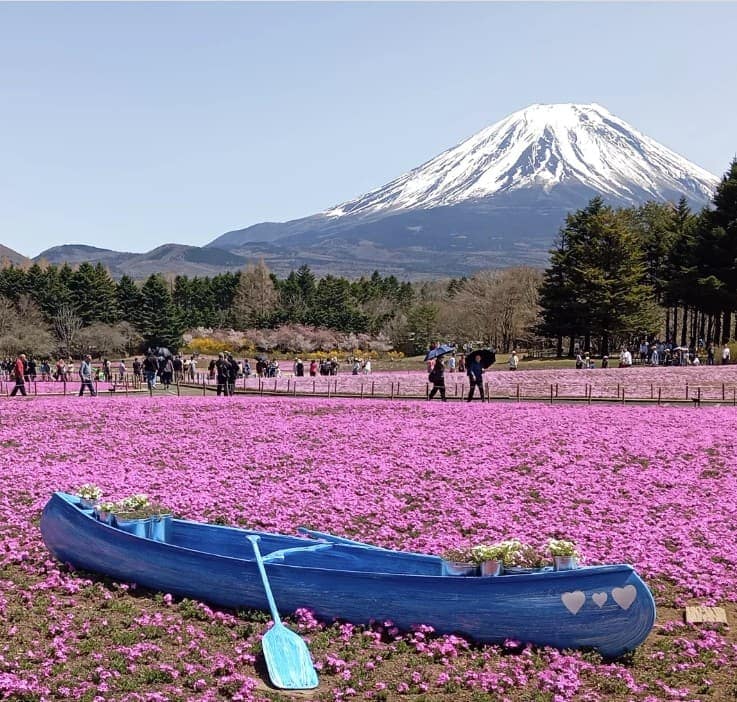
I had missed visiting an official visit to Tokyo in the past due to another other work emergency. I really wanted to make it this time. We wanted best of all- Cherry blossoms, other spring flowers like Shibasakura – where you see a bed of phlox moss flowers, Wisteria; Alpine route, Takayama festival, so decided to strategically book dates from April 9- 23rd
While I debated a lot in my mind whether to include Hokkaido, the reviews of having nothing much to see in April dissuaded me. We decided to extend our days in Honshu and see more places there like Takayama, added a day in Tokyo to see spring flowers
Japan is very different from other places we have visited so far. The geography makes it secluded, developing a unique culture. You need to visit to be able to understand the difference, words are not enough to describe what the feelings are when you are actually there
Public transport is very reliable, dot on time. Taxis are super expensive, hence most end up taking buses, trains, resulting in walking 20k-25k steps per day. The temples are usually on hilltop, adding few more steps and stairs. If you cannot walk for a long time, you can take tours which are slightly more expensive and can take you closer to main attractions. However, still expect 10k+ steps a day
Japan was one of the most researched trips for me- it took me 6+ months to understand the places, connections, which passes cover what, how to sequence places to ensure JR pass coverage within a week, how to fit cherry blossoms with other flowers that bloom only later in April, which hotels are close to stations and offer vegetarian options etc. We suggest starting to plan early
We cover why it is critical to plan for Japan trip separately here
Best time to visit
- Plum blossom is during Feb-Mar
- Cherry blossom season from March- mid April
- Alpine route opens from mid-April till November
- Shibasakura or pink moss starts late April
- Wisteria starts late April- May
- Lavendar season is from July, best for Biei, Furano
- Autumn during October- November is good time for fall colors
- Winters from December- February is good for Hokkaido, Nagano snow monkey park
We chose 9th -23rd April to be able to see Cherry blossom, Shibasakura, other spring flowers like Wisteria, Azalea and the Alpine route
Every flowering is a bit of luck! So don’t fret and go whenever you get a chance
Visa
Indians need to apply for sticker visa or e-visa. E-visa does not mean online application- it just means visa will be sent on e-mail instead of a sticker, while document submission process remains the same. E-visa needs an internet connection on smartphone while in Japan to show the QR code, so we chose to do away with the hassle and opted for sticker visas
You need not go in person to the consulate for document submission, so going through agents is an option if you are not residing in metros. It was better for us to submit in person including travel cost, so we did it on our own in Bengaluru. The Japan VFS helpline is very useful in answering queries
Getting In
Tokyo, Osaka are mostly places to get in through flights. Japan Airlines (JAL) uses Haneda airport mostly which is closer to city in Tokyo. Narita is another airport about 60 minutes away from city and more expensive than Haneda. Haneda airport is connected through Keikyu line to Shinagawa, Asakusa
We took flight from Delhi- Tokyo. Bangalore- Tokyo route had opened, but prices were 3x-4x for some reason, Mumbai was not served by JAL, so we chose Delhi route. The flights were on redemption, 2 tickets on Avios and one from Emirates. We used HDFC Diners points to convert to Avios where we fell short of points. Emirates had better redemption value, however there were some tech glitches in booking direct on the portal using points. We got help on chat which was quite prompt and seamless. Book early to have enough choice on dates since there are only single digit tickets available, specially on Avios
If you plan to visit Hokkaido, you can get cheap flights on Peach Airlines, Jetstar, Airdo which are not covered by aggregators, in addition to ANA, JAL.
ANA and JAL have special domestic fares/ passes for international tourists. These are non-refundable fares though. JAL runs promotions like free domestic flights on booking international flights- keep an eye
Haneda airport has ATM, Suica vending machine and JR pass counter all together opposite Keikyu line entrance after customs. You can ask at information counter if you are finding it difficult to locate them.
Currency- Yen
You can exchange money at the airport for small expenses, rates are not very different. We took cash from ATMs at 7-11s which typically charge a 220 Yen fee above 10k
50k cash was sufficient for 3 people for 14 days. Cash is required mainly for temple entry fees at select places which do not accept cards. The Snow Monkey pass counter at Nagano station also takes only cash
Getting around
Japan Guide is very useful to research everything in Japan from places, passes, public transport
You will have to heavily use public transport to save on money. Taxis are very expensive. For example, airport to city can cost INR 15k+ (30k Yen/ 200+ USD) burning a large hole in your pocket
Uber worked in Tokyo. Go app is helpful for taxis in case you want to use it for short distances
Take a SUICA/ PASMO card for local travel and keep loading it. It is useable in all cities. You will need one card per person. You can load a minimum of 500 yen upto 20k yen. Welcome Suica cards meant for tourists do not have a deposit requirement, is valid for 28 days and there is no option to get a refund on balance left. We used up left over balance at convenience store at Haneda airport. You can also use them at vending machines post security
Normal Suica cards are hard to find, but they come with 500 yen refundable deposit, longer validity and leftover balance is also refundable
Public transport is quite easy to figure out with Google maps. You can see the next best connection, platform number, expected fare in major cities. Be comfortable with changing trains multiple times- it is coordinated well and not a big hassle. There are enough signboards in English. You can find the exit closest to your point of interest on Google maps as well
For travel between cities, there are hundreds of passes available. You will find calculators online to check if passes are beneficial vs. individual tickets. The general thumb rule is to get one at most places
We bought the following
- 7 day JR pass for travel between cities
- Nikko pass
- Hakone pass. There is a Fuji-Hakone pass, but we decided to cover Fuji from Tokyo to avoid lugging our bags around
- Snow Monkey pass
- Alpine route tickets separately (not a pass in true sense)
- Suica card for intra city travel
JR pass
JR pass is the most useful one- we took a 7 day pass. If you plan to go beyond Kyoto/ Osaka, Hiroshima from Tokyo, the pass works out to be economical. JR pass is not valid on Nozomi and Mizuho routes. We strongly recommend buying the pass online through their official website although it is upto 5% more expensive, as it given you an option to make reservations on the website/ app on the go. There were many instances when we finished sightseeing and came back wanting to take an earlier train. You can reserve upto 6 minutes before train departure. Reservations are not mandatory, but most trains got full a day before, hence reservations are recommended during busy seasons
JR pass is a small piece of paper that goes in and comes out of station gates. Ensure you don’t lose it or get it damaged in the rains. Even if you lose it, check in the lost and found sections as most people tend to return it if found. We had heard you cannot buy a second pass in the same validity duration as the first one if you lose it, so do hold on to it tightly
The JR pass is valid even on some buses run by JR like in Nara, ferries in Hiroshima- Miyajima, Yamanote line in Tokyo, JR Haruka Hello Kitty train for travel between Osaka and Tokyo etc.
We had bought the pass online and exchanged it for physical voucher at Haneda airport JR pass counter. The activation date was 2 days later for us- these dates cannot change once you take the physical passes
We were told that it is mandatory to get the reservations printed from machines before travel. While that was never asked for anywhere except in Toyama station, it is easy to get them from machines if you need it for your reference
Other transport
You can book buses online from Tokyo on Willer, Japan highway bus (e.g., Tokyo- Kawaguchiko); Nohibus/ Japan bus online in Kanazawa area (Toyama- Shirikawago- Kanazawa)
Luggage transfer
Pack light to minimize lugging efforts. Yamoto with its omnipresent two cat logo offers door to door luggage transfer in 1-2 days across Japan, called Ta-Q-bin. Do your research and plan to do day trips from hubs like Tokyo, Osaka, Nagano to avoid taking luggage all around
While the price is quite reasonable for Japan standard and expensive for Asian standard, it was very useful. We sent our luggage from Osaka to Tokyo, to avoid luggage on Alpine route which is next to impossible in crowded cable cars. Alpine route offers it own luggage transfer which is expensive (4k Yen vs 2k-2.5k outside directly through Yamoto). Your hotel can help fill up the form and get it sent. They will make a call to your next hotel to confirm the reservation and drop off times
Places to visit in Japan
Here’s our itinerary across 14 days
- Tokyo- Palace area, Shibuya crossing, Meiji shrine, Shinjuku park
- Nikko heritage area
- Osaka- Nara, Arashiyama Bamboo grove
- Kyoto temples- Kinkakuji, Ginkakuji, Kiyomizudera, Fushima Inari
- Himeji castle, Hiroshima- Miyajima island, Atomic Bomb dome
- Takayama festival
- Shirakawa Go, Kanazawa- Castle and Gardens
- Alpine route
- Nagano Snow monkey park, Zenkoji temple
- Tokyo- Ueno park and zoo, Asakusa temple, Odaiba, Team Labs planets
- Hakone
- Fuji area- Kawaguchiko and Shibasakura near Motosuko
- Hitachi seaside park, Ashikaga park
- Departure
We cover details in separate posts
- In Tokyo
- Around Tokyo
- Around Kyoto, Osaka, Himeji, Hiroshima
- Around Takayama, Nagano, Kanazawa, Toyama Alpine route
Things to know
Japan has many unique aspects
- Trains cross 300km/ hr speed, so you can reach any major city in 2-3 hours using bullet trains
- There are no dustbins in public areas- you need to carry trash back to your room
- Toilets are very sophisticated with tens of buttons, music, heated seats
- You will find cat cafes, rabbit cafes, cabybara cafes and many more kinds of cafes
- Museums are next gen-Visit Teamlabs for a unique digital museum experience
- You can get special stamp-seals called “Goshuin” at prominent shrines, which you can keep as a memento
Food
We carried ready to eat food as always. You can get bananas and yoghurt easily at 7-11s or Family marts that are omnipresent. Other vegetables and fruits are slightly difficult to find- you can get them at supermarkets or some outlets in stations
Surprisingly, coffee with milk was not omnipresent. While some 7-11s have vending machines that dispense coffee, most outlets have dine in options for coffee. Starbucks was present in some major locations, not all
Multi flavored Kitkats are a specialty of Japan. We bought some in green tea, peach, melon flavors. We saw more than 10 flavors in Osaka Dotonbori- sale caramel, cheesecake, Momiji Manju, and many more which we couldn’t comprehend
Where we stayed
Book your hotels in advance if you are planning for Cherry blossom/ peak months. Prices shoot up >2x-3x and availabilities become limited close to date
All hotels had similar standards, cleanliness and size. The rooms are small compared to other countries with very limited space to keep luggage. There are no cupboards- only hangers. We opted for hotels in the station or very close to station to minimize walking
Breakfast is typically $15-20 and includes Japanese dishes heavily. You can find 1-2 continental options like bread/ cereal. Most hotels have rice as an option which we mixed with yoghurt and had stomach full breakfast! Be careful to chose the option without breakfast for days where you have to start early. Breakfast typically starts only at 6:30-7 AM in most places
- Tokyo- Shinagawa Tobu Hotel. The hotel was 10 minutes walk from the station. Although it is uphill, you can take luggage with you walking. We took a taxi first time after reading reviews, which was not required in hindsight. The hotel had good choice of vegetarian and continental options for breakfast
It is better to stay close to Yamanote line that connects all other major areas. Shinagawa is also a Shinkansen stop for trains headed south. The other alternative can be close to Ueno. Tokyo station had only high-end expensive hotels
- Osaka- Fairfield Namba as a redemption booking. The hotel does not offer free breakfast as a welcome amenity for Bonvoy elite. We were offered 500 Yen worth purchase from their market shelf where most items were priced 300-400 Yen. We opted for points instead
- Toyama- Toyoko Inn. Offered free breakfast, with only a couple of items like bread, rice being non-Japanese
- Nagano- Tokyu Rei. Right across the station and accessible from the station directly through an elevator
How much does it cost
We spent $2300 per person
- Flights: $800. We had booked some flights on points through Emirates and British Airways Avios. Both had online booking options. The cash charges on Emirates were quite low <4k INR vs British airways at 20k
- Hotel : $500 at $60-70 per night. Breakfast is typically expensive at $15-20 per person. We chose to have it included, but you can reduce expenses by having your own breakfast from convenience stores
- Passes and transport: $800
- Food: <$50 (We carry our own food/ shop at supermarkets)
- Entry fee: $110
- Visa: $35, including travel cost for document submission; Pure visa cost is $20
- Insurance: $20