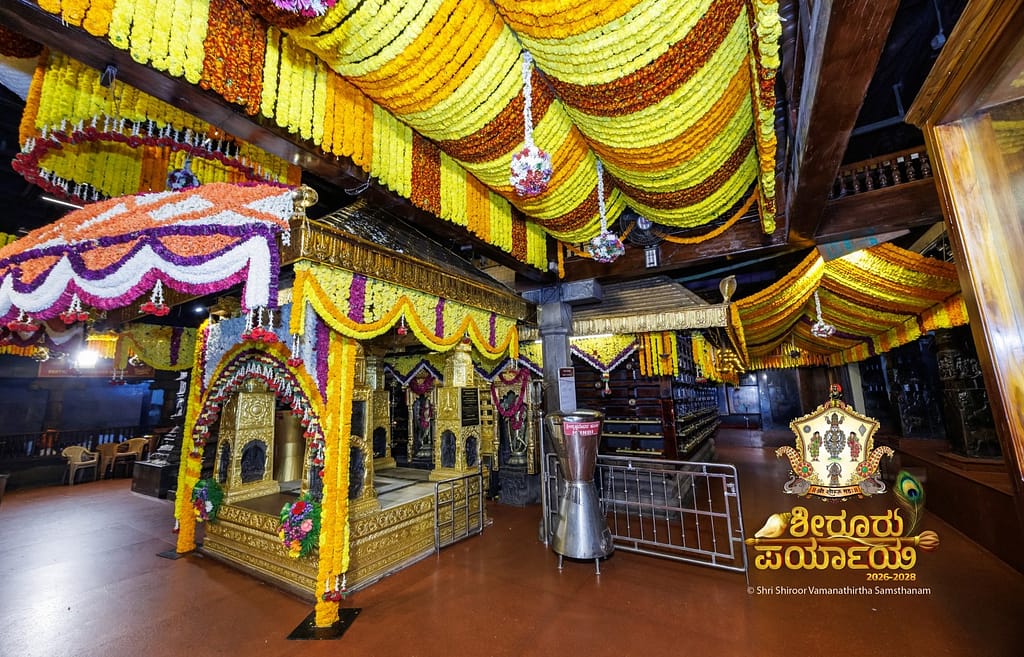
Udupi is aptly called temple town. You can find one temple every 500 metres. In addition to temples, there are shrines dedicated to demigods/ Daivas, made famous by the movie Kantara. The Udupi Paryaya (meaning change) is one of the grandest biennial festivities in South India, with Shiroor mutt taking over in 2026
There are eight mutts who preside over the rituals of Sri Krishna mutt in rotation. The famous philosopher Madhwacharya played a prominent role in establishing this system. Paryaya happens around January 18th every alternate year
Some interesting facts about the Astha mutt system
- Madhwacharya found the idol of Lord Krishna at Malpe from a rescued ship. He also found the idol of Balarama which is currently at Vadabandeshwara temple
- There are about 13 daily rituals that pontiffs perform from dawn to dusk
- The rotation system started in 1522 AD, so these celebrations have been happening for more than 500 years now. It was initially happening for 2 months each which was changed during times of Sode Vadiraja swami so that pontiffs could undertake Tirtha yatras or pilgrimage
- Lord Krishna is said to have turned around to give darshan to his devotee Kanakadasa. There is a “Kanakana kindi”, from where devotees can see the idol from outside the mutt
- Each of the astha mutt is paired with another so that one can support the other in succession transfer in case a pontiff passes away without appointing a junior successor
- The temple lunch is strictly vegetarian satvik cuisine without onion or garlic. It includes only local vegetables like madras cucumber, ash gourd, local ladies’ fingers, GI tagged Mattu brinjal. You won’t even find vegetables that came in later with Portuguese and Spanish like potatoes, tomatoes. Udupi cuisine is famous across India and beyond for being healthy, simple and cheap
- The mutts also run goshalas or cow shelters to take care of abandoned and sick cows
Preparations start 12 months before the actual event. Different muhurtha (auspicious time) are held to ensure supply of essentials during the paryaya tenure, starting with banana, rice, firewood and paddy. The firewood is stored in the shape of a chariot. These mutts used to hold a lot of land and property decades ago. Current activities are funded by devotee donations
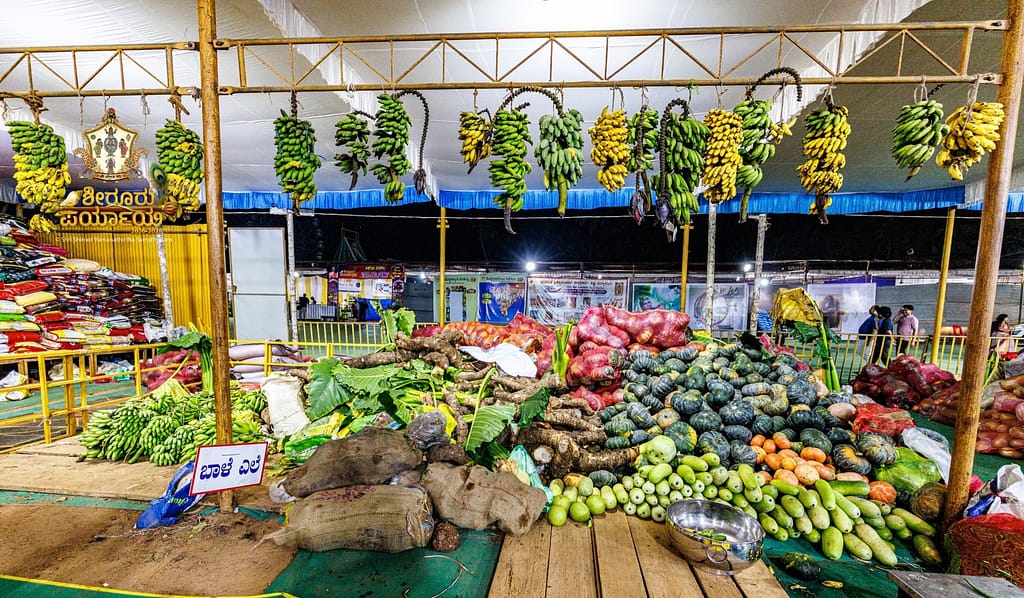
“Pura pravesha” happens about 10 days before the event where the pontiff who takes over enters the city. “Hore Kanike” or donations in the form of vegetables, bananas, coconuts, jaggery and other essentials are given by devotes in a procession everyday
The event happens 4 days after Makara Sankranti. Day 2 is Churnotsava where 3 chariots are pulled. Day 3 is Brahma Rathotsava where all chariots are pulled- 4 made of wood, one each made of silver, gold and gems. These rathas circle around car street.
On Day 4, The pontiff who takes over has a dip at the Dandatirtha pond and enters the city around 2:30 AM. Procession starts around mid-night from Jodukatte. You can find dancers, tableaus palanquins carrying swamijis, all marching towards Krishna mutt. The processions end in the public sabha (gathering) where all pontiffs address the public

It is fascinating how temples have taken up the responsibility to feed thousands of devotees every day. The “Akshayapatre”, symbol of never-ending food, is handed over from previous pontiff to the next as a symbolic transfer of this responsibility. Chef Vikas Khanna had aptly said people in Amritsar (and by extension other religious towns in India) are well fed by temple food. The sense of hunger for him rather came from his time in New York. About 5k people have lunch at the Bhojana shale EVERY DAY. There is no lunch or dinner only on Ekadashi that occurs every 15 days where people are encouraged to have a daylong fast. These numbers go upto 1.5 lac during Paryaya festivities
Faith can move mountains. It takes the entire town to volunteer to prepare, serve and clean up after lunch. Different associations host breakfast and dinner so that devotees are taken care of. It feels blessed by the Lord that everything goes smoothly without adverse events in terms of crowd management, chariot runs, rituals and prasadam

Udupi is a town whose economy is driven by annual temple festivals, community functions and spiritual celebrations. While India itself has all of these happening in most places, the frequency and extent is magnified significant folds here. Many find work supplying groceries, cooking, serving food, and cleaning. No soul goes hungry despite income levels or caste groups
India is rich in culture, with festivals happening is every temple. Unlike La Tomatina in Spain and Rio Carnival, these are less famous. It could be partly because they get lost among thousands of celebrations that happen in India, and partly because they haven’t been marketed heavily
I am not a very spiritual person, but the grand scale brings out many emotions like humility, gratitude, wonder, and a feeling somewhere that there is a larger force beyond human power