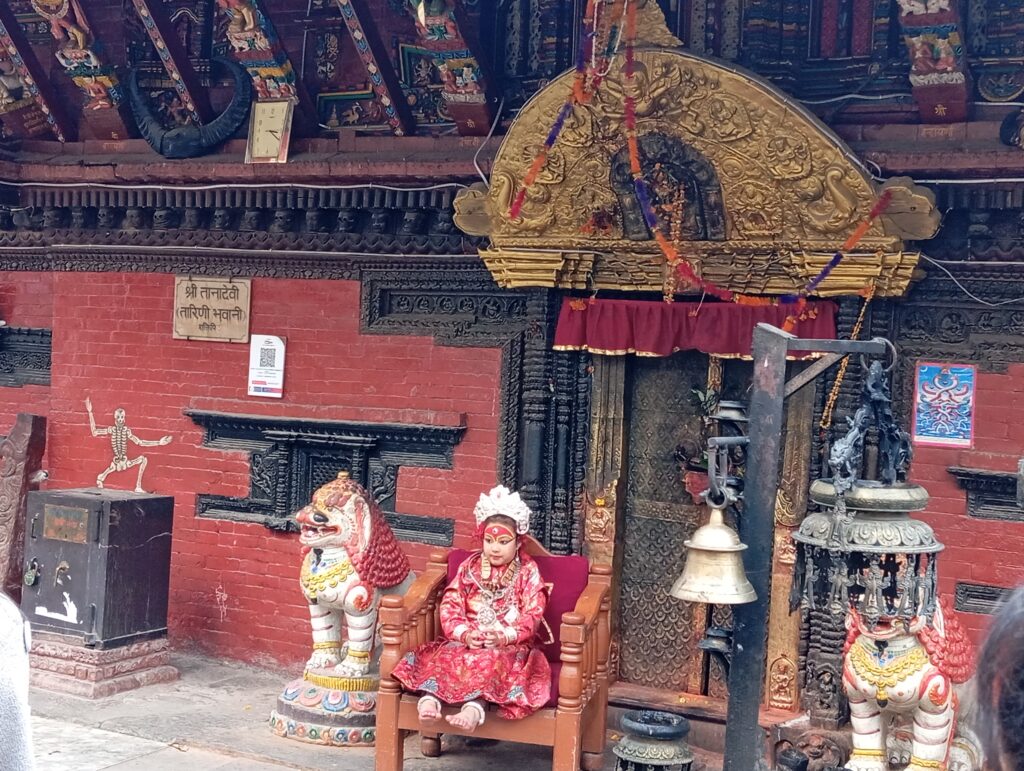
Nepal is a predominant Hindu nation. While Hinduism and Buddhism blend seamlessly, some of the beliefs and traditions stand out, particularly the living goddesses- Kumari in Nepal
A young girl Kumari, believed to be female energy Shakti or incarnation of Taleju (Durga), is worshipped as a goddess till she attains adulthood. The goddess is chosen by Buddhist community and worshipped by both Hindus and Buddhists.
This custom started in Kathmandu during the time of King Jayaprakash Malla in the 17th century. Legends say that the king used to play dice everyday with Godess Taleju. The queen accidentally spotted goddess Taleju playing dice secretly. She disappeared in rage and promised the king to return as a Newari girl when he pleased for her return. The king went searching for her in Newari communities and that is the first time when the tradition began
Strict selection process for Kumari
There is a strict and long selection process, like the selection of Dalai Lama in Buddhist faith.
- From Shakya or Bajracharya community
- In perfect health without scars, wounds, broken teeth, or even birthmarks
- Having 32 characteristics or divine perfections, which only the priests are aware of
- With horoscope aligned with the king
- Showing no fear during trials involving masked dance, darkness and blood
A huge animal sacrifice takes place when the new Kumari is appointed. Godess Kumari has a third painted eye and is dressed in silk, gold ornaments. Kumari ghar is the palace near Durbar square where you can get a glimpse of the goddess. She is always carried in palanquins as her feet are not supped to touch the ground. A red carpet is laid out for her to walk anywhere
She spends time blessing visitors, learning and taking part in ceremonies. People gift food, sweets and toys to the young girl. She goes home only for select times of the year for festivals
Her caretakers have also taken to the profession from their forefathers
Life after Kumari tenure
Positive changes in recent past have enabled Kumaris get private tutors and a monthly pension of minimum wages after moving to normal life
Her family is also respected equally, and parents consider having their daughters as kumaris a privilege. Some families often bear the financial burden during the reign, in separating a room for her, doing pujas, offering special food,
Surprisingly, her divinity is believed to end if she gets wounded or reaches adulthood, or if her milk tooth falls out in case of Bungamati Kumari. By the time she reaches adolescence, search for the next Kumari begins. It is surprising that former goddesses lead a simple human life afterwards, often in suboptimal conditions. They come to terms with the harshness of the world, finding it difficult to cope up. There is a belief that men who marry ex-kumaris die early, leaving many unmarried. This story throws deeper light into their lives
The latest goddess is a 2 year old girl Aryatara who was welcomed during Dashain, the grand festival in Kathmandu.
Patan has a similar Kumari, the second most revered goddess, in addition to Kumaris in Lalitpur, Bungamati, Sankhu, a total of 10. Even a glimpse of the goddess is supposed to bring good luck. Any positive movement like a smile can mean the world for people in Nepal It is fascinating how oral traditions have been followed across centuries!